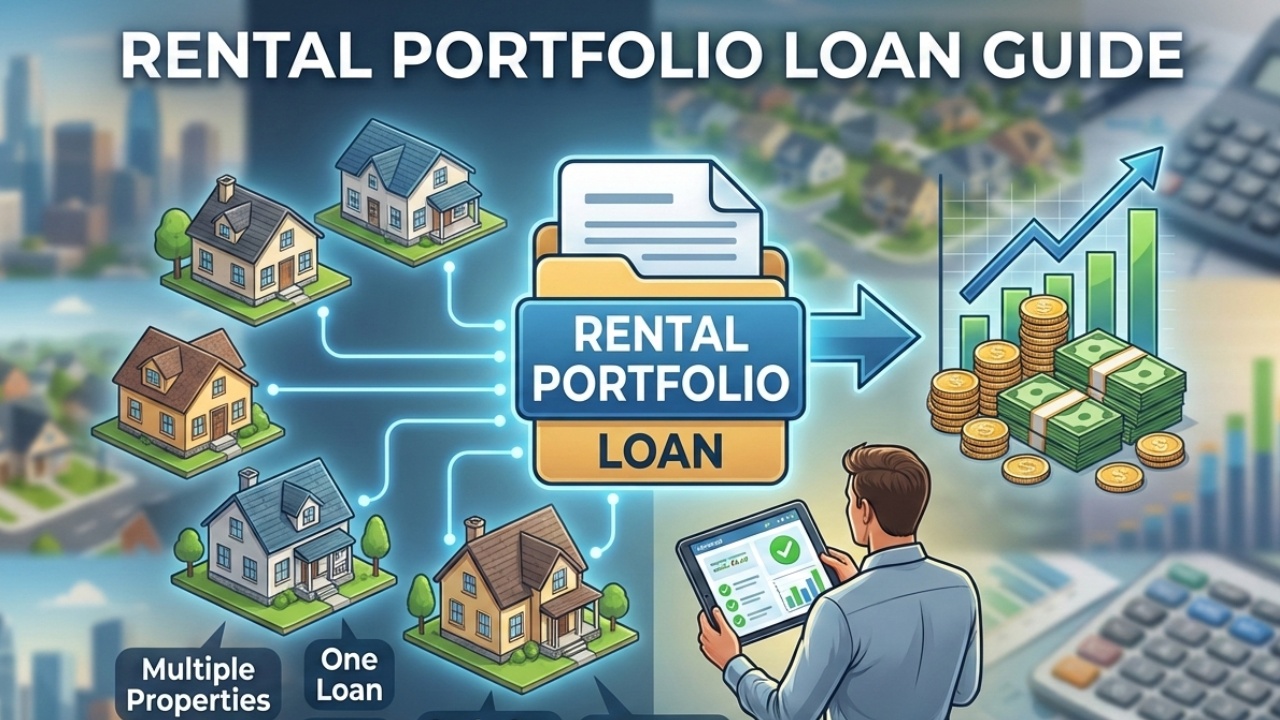
A rental portfolio loan is a financing option for real estate investors that allows them…
DSCR Loan for Mixed Use Property: How to Finance 2–8 Unit Buildings
A DSCR loan for mixed use property allows real estate investors to finance buildings that combine residential and commercial units by qualifying based on the property’s income rather than personal income.
This guide explains how DSCR loans work for 2–8-unit mixed-use properties, including loan limits, unit requirements, credit standards, cash flow rules, and common restrictions.
What Is a DSCR Loan?
DSCR stands for Debt Service Coverage Ratio. It measures whether a property’s income is sufficient to cover its mortgage payment.
Lenders calculate DSCR by comparing the property’s rental income to its monthly debt obligations. If incoming income exceeds outgoing debt, the loan may qualify. A DSCR above 1.0 is required, and higher ratios improve approval chances and pricing.
Unlike traditional loans, DSCR financing focuses on the property’s performance rather than the borrower’s personal income.
What Counts as a Mixed Use Property?
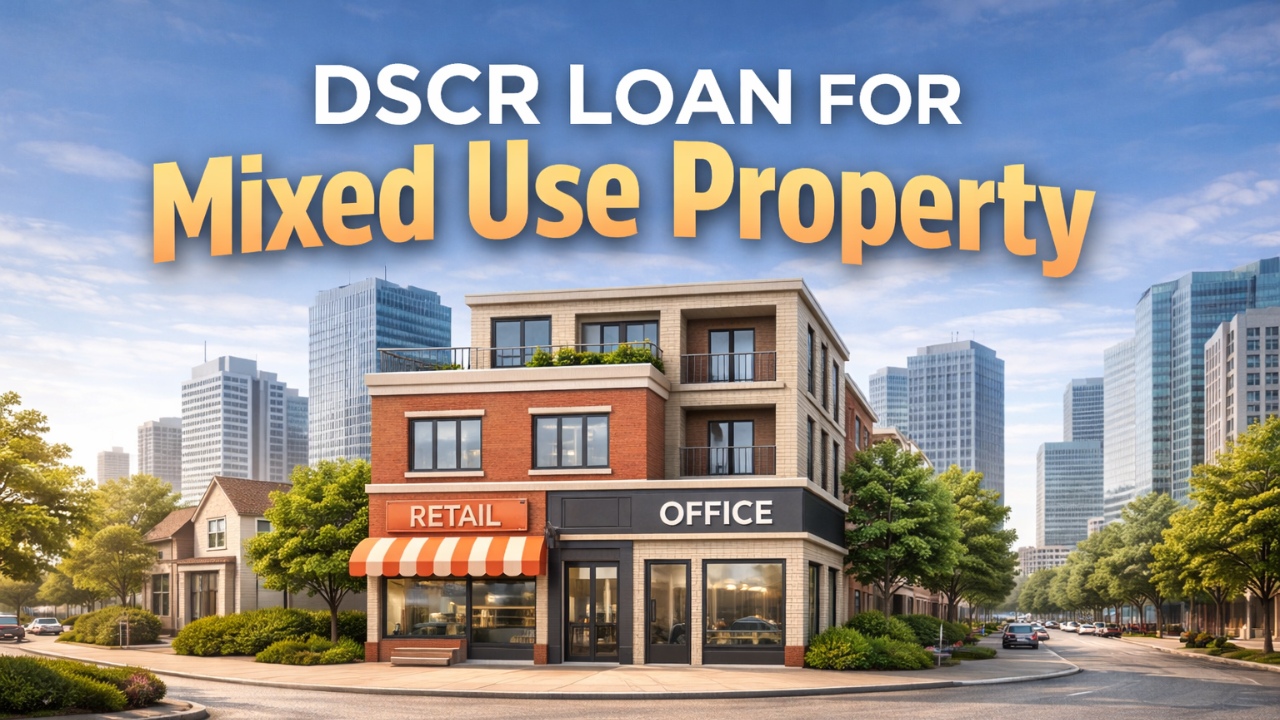
A mixed use property includes both residential units and commercial space within the same building. The most common setup is a ground-floor retail or office space with apartments above. While mixed-use properties are often treated as commercial real estate, DSCR loans for 2–8 units are structured to lean more toward residential-style financing, provided specific requirements are met.
Maximum Loan Amount
The maximum loan amount for a DSCR loan on a mixed-use property is up to $3 million, and these loans are strictly for investment properties. To qualify, the property must generate enough income to produce a DSCR greater than 1.0. Stronger cash flow improves loan terms and approval odds.
If the loan amount exceeds $2 million, lenders require two appraisals. The lower of the two values is used for qualification purposes.
Unit Breakdown Rules (2–8 Units)
Lenders limit how many commercial units are allowed
- For 2–3 unit properties, only one unit may be commercial.
- For 4–5-unit properties, up to 2 units may be commercial.
- For 6–8-unit properties, a maximum of 3 commercial units is allowed.
Exceeding these limits pushes the deal into full commercial financing.
The 49% Commercial Space Rule
The commercial portion of the building cannot exceed 49% of the total square footage. If commercial space exceeds this threshold, the property no longer qualifies for DSCR residential-style terms. It will require traditional commercial financing, which typically entails shorter amortization periods, balloon payments, and stricter underwriting.
Loan Terms and Amortization
These loans often offer 30-year fixed-rate terms, with some lenders also offering 15-year fixed-rate options. Most investors choose longer terms to keep monthly payments as low as possible, thereby maximizing cash flow.
Interest-Only Option
Many DSCR loans include an interest-only option. While the interest rate may be slightly higher, the monthly payment is lower. Since rental property investing is a business, many investors prefer the option that yields the highest monthly cash flow, even if it incurs higher interest costs.
Reserve Requirements
Lenders require six months of reserves, calculated as six months of principal, interest, taxes, and insurance. Reserves do not need to be cash only. Acceptable sources often include savings accounts, money market funds, stocks, bonds, IRAs, and 401(k)s. These funds are not spent—they are verified to reduce lender risk.
First-Time Investor Restrictions
These DSCR loans are not available to first-time investors. Borrowers must show ownership or management of real estate within the last one out of three years, and you must document it.
Credit Score Requirements
The minimum credit score is 660. The best terms are typically reserved for borrowers with scores above 720, 740, or 760 although loans are possible at this level. Higher credit scores generally mean lower rates and better overall loan pricing.
Tenant Restrictions
Family members may not occupy any residential or commercial units on the property. All leases must be arm’s-length and income-producing.
Gift Funds Guidelines
Gift funds are allowed, which is uncommon for investment properties. However, the primary borrower must contribute at least 10% of their own funds to the transaction. Gift funds can cover the remaining down payment or costs.
Prepayment Penalties
Prepayment penalties usually apply where allowed by state law and typically range from 1 to 5 years. Shorter penalties often carry higher interest rates, while longer penalties generally carry lower rates. States that prohibit prepayment penalties tend to have higher overall pricing.
Closing Costs and Fees
DSCR loans always include costs. There is no rebate pricing or lender credit. Expect discount points, broker fees, and standard closing costs. This is normal in investment and mixed use real estate, where deals are structured upfront rather than through rate credits.
Final Thoughts
A DSCR loan for mixed-use property is a powerful financing option if you’re an investor purchasing or refinancing 2–8-unit buildings with both residential and commercial components. As long as the property cash flows, meets unit limits, and stays under the 49% commercial rule, investors can access long-term, residential-style financing with flexible structures designed for cash flow.

Related Posts