Interest only mortgage payments allow you to pay only the interest on your loan for…
Bank Statement Mortgage for Self-Employed: Here’s How to Qualify
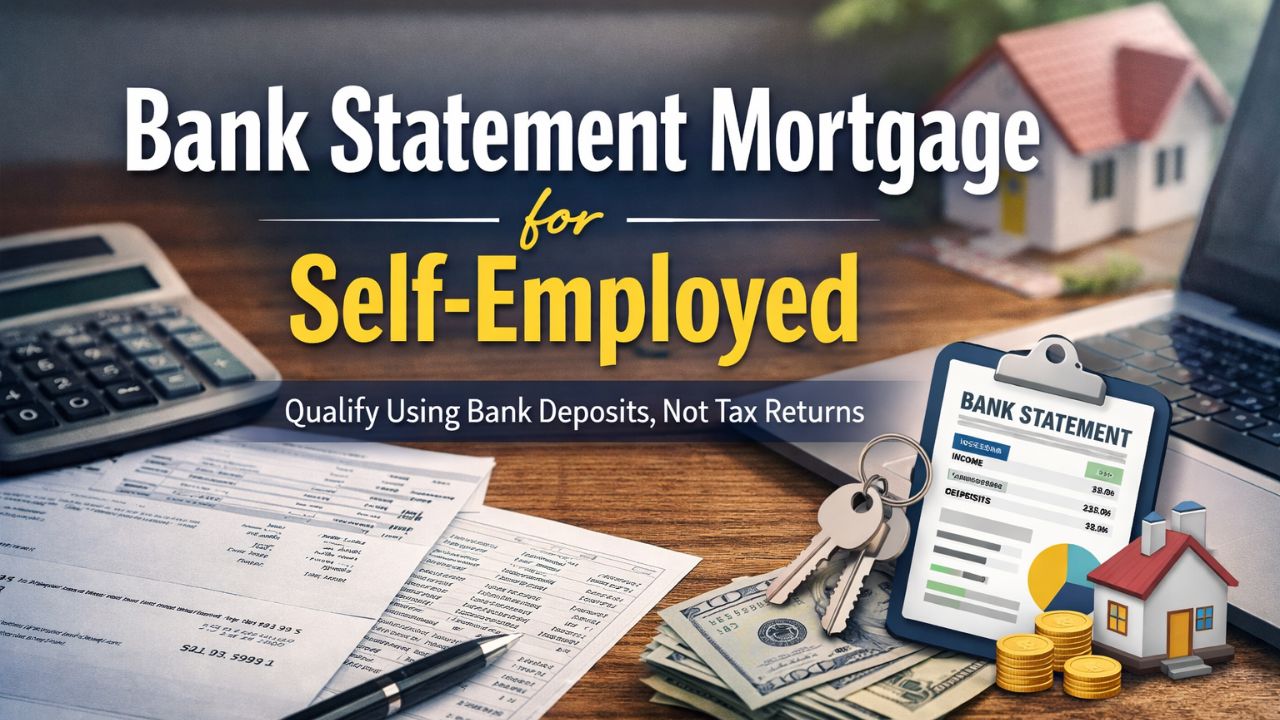
A bank statement mortgage for self-employed borrowers is an alternative financing option that allows business owners to qualify for a mortgage based on their bank deposits instead of traditional tax returns. This type of loan is ideal for self-employed individuals with consistent cash flow but may not fully reflect their income on tax returns due to business expenses and deductions.
How Does a Bank Statement Mortgage for Self-Employed Borrowers Work?
For traditional mortgage applications, lenders typically require proof of income through tax returns. For self-employed individuals, this often doesn’t reflect their actual income due to various business-related deductions.
A bank statement mortgage, however, evaluates the actual deposits into a borrower’s bank account over the past 12 to 24 months, providing a clearer picture of their financial health. This alternative method is beneficial for self-employed individuals who may have large write-offs on their tax returns, making it harder to qualify for a traditional mortgage.
By focusing on your bank statements rather than tax returns, a bank statement mortgage for self-employed borrowers offers greater flexibility and is based on your business’s actual cash flow.
The Traditional Mortgage Qualification vs. Bank Statement Mortgage
The traditional mortgage process typically reviews your tax returns, including personal and business filings. The lender will calculate your income after factoring in your business expenses and deductions. However, this method often doesn’t work for self-employed individuals who write off a significant portion of their income to minimize taxes.
In contrast, a bank statement mortgage for self-employed borrowers assesses your income based on your bank deposits, either from personal or business accounts, depending on how your business is structured. This can provide a more accurate reflection of your financial situation and often helps self-employed borrowers qualify for a larger loan.
How Do Lenders Calculate Income for a Bank Statement Mortgage?
For a bank statement mortgage for self-employed borrowers, lenders typically review the last 12 to 24 months of bank statements. The lender will then apply an “expense factor ratio” to calculate the income. For most borrowers, this ratio is 50%, meaning the lender considers half of the total amount deposited into your account as your qualifying income.
For example, if you have $100,000 in deposits, the lender would consider $50,000 as your qualifying income. If you can prove your expenses are below 50%, for example, with a CPA letter showing they are only 25%, the lender may apply a lower expense factor, which could improve your loan eligibility.
Advantages of a Bank Statement Mortgage for Self-Employed Borrowers
- Easier Qualification: A bank statement mortgage for self-employed borrowers helps you qualify using actual bank deposits rather than taxable income, which is beneficial if you have significant business expenses.
- More Flexibility: If you have inconsistent tax returns but a consistent cash flow in your business, this mortgage option provides a more accurate reflection of your financial situation.
- Larger Loan Potential: Because the qualification is based on actual deposits, you can qualify for a larger loan than you would with a traditional mortgage, especially if your business is doing well. Still, your tax returns don’t reflect that.
Drawbacks of a Bank Statement Mortgage for Self-Employed Borrowers
While a bank statement mortgage for self-employed borrowers offers many benefits, there are also some downsides:
- Higher Interest Rates: These mortgages typically carry interest rates 1-2% higher than traditional loans due to the higher risk and flexibility involved.
- Credit Score Requirements: To qualify for a bank statement mortgage, you typically need a minimum credit score of 660, with 700 preferred for the best rates.
- Reserves Required: Many lenders require reserves (extra funds set aside) of 6 to 24 months. This is more than what you’d typically need for a traditional loan.
- Down Payments: A bank statement mortgage typically requires a down payment of at least 20%, though some lenders may accept as low as 10%, depending on the lender.
- Lower Debt-to-Income Ratios (DTI): For bank statement loans, your DTI ratio is usually capped at 43%. While traditional loans can go up to 50%, these loans are more conservative due to the higher risk.
Is a Bank Statement Mortgage Right for You?
A bank statement mortgage for self-employed borrowers is an excellent option if you’ve struggled to qualify for a traditional mortgage due to high business expenses or deductions. It allows you to qualify based on actual bank deposits rather than taxable income, making it easier for self-employed individuals to secure financing. If you have a steady income, a solid credit score, and can demonstrate consistent deposits in your business or personal accounts, this type of mortgage might be the right choice for you.

Related Posts