DSCR loans for multifamily properties are loans a real estate investor can use to purchase…
Rental Portfolio Loan Guide (Finance Multiple Rental Properties With One Loan)
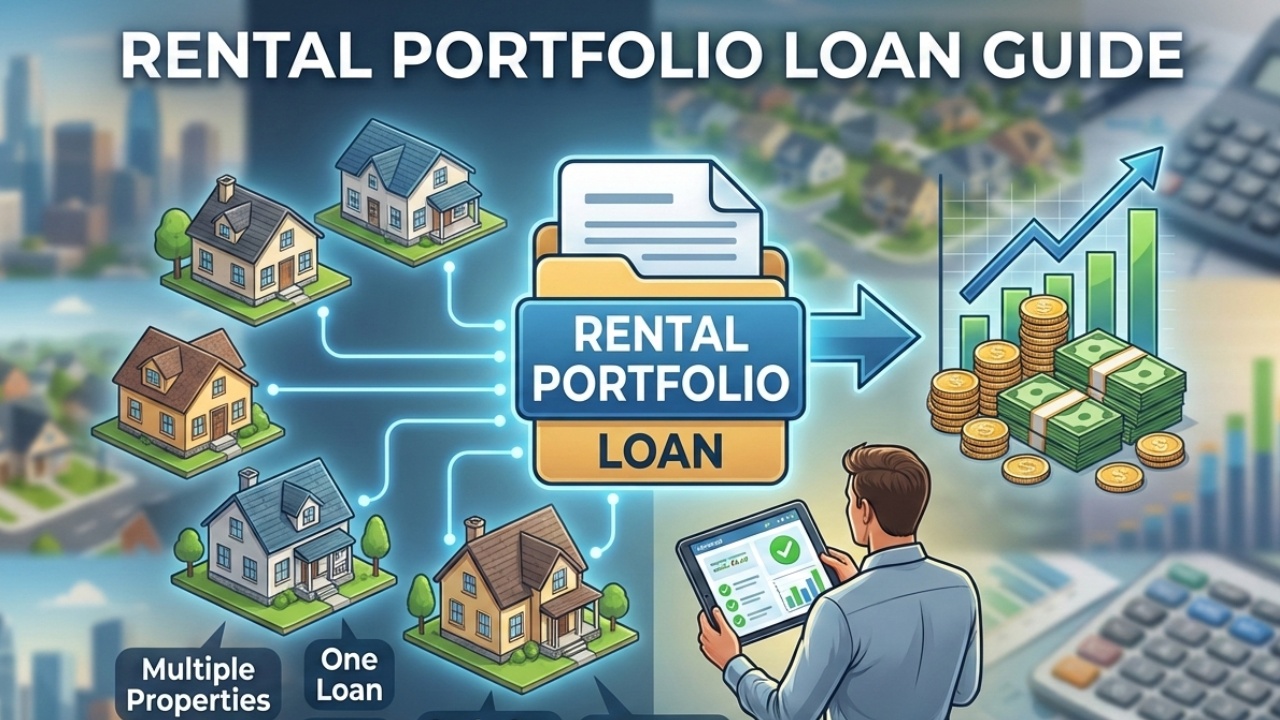
A rental portfolio loan is a financing option for real estate investors that allows them to fund multiple rental properties with a single loan, rather than managing separate mortgages for each property.
This rental portfolio loan guide explains how portfolio loans work, who qualifies, minimum loan requirements, DSCR rules, cash-out options, interest-only structures, reserve requirements, credit score expectations, and prepayment penalties.
Understanding Rental Portfolio Loans
The rental portfolio loan, also called a portfolio loan, is designed specifically for experienced real estate investors who own multiple rental properties. Unlike traditional mortgage loans from banks or depository institutions, these loans are typically offered through mortgage brokers who work with specialized lenders.
The most significant advantage of a rental portfolio loan is simplicity. Instead of juggling multiple loan applications, monthly payments, and paperwork, investors can consolidate several properties into one single loan. This approach functions similarly to blanket financing, making it easier to manage and scale a rental portfolio.
Who Should Consider a Rental Portfolio Loan?
The rental portfolio loan structure is best suited for investors who already own multiple income-producing properties and want a more efficient way to refinance or access equity. If you’re tired of refinancing properties one by one or managing several loans at once, a portfolio loan can significantly reduce administrative complexity.
Before moving forward, we strongly recommend consulting a tax advisor. Financing multiple properties under one loan may affect your tax basis differently compared to individual property loans, and understanding those implications upfront can prevent surprises later.
Rental Portfolio Loan Requirements
To qualify for this type of financing, investors must meet several key criteria. Most lenders require a minimum of five rental units within the portfolio. These properties must be strictly investment properties, meaning the borrower cannot live in any of the units, nor can family members occupy them.
The minimum loan amount is typically $500,000. Each property included in the portfolio must usually be valued at at least $50,000. Properties located in rural areas are generally not eligible; they must be in urban or suburban markets.
DSCR Rules Explained
This is a DSCR-based loan, meaning qualification is determined by the debt service coverage ratio rather than personal income. The minimum DSCR requirement is usually 1.20. This means the rental income generated by the properties must exceed the loan’s monthly debt obligations by at least 20%.
In simple terms, lenders want to see strong cash flow, with rental income comfortably covering the loan payments.
Refinance and Cash-Out Options
Rental portfolio loans are available only for refinances. Investors cannot use this loan to purchase someone else’s portfolio. You can either refinance existing loans into one consolidated loan or do a cash-out refinance.
Cash-out refinances typically allow up to 75% loan-to-value. If you choose an interest-only option, the maximum loan-to-value is usually capped at around 70%. Many investors use this structure to access equity while keeping monthly payments low.
Interest-Only and Loan Term Options
One of the most attractive features of a rental portfolio loan is flexibility. Investors can choose a traditional 30-year fixed loan or opt for a 10-year interest-only period followed by a 20-year amortization.
For investors focused on maximizing cash flow, the interest-only option can be especially powerful. Lower payments during the interest-only period can significantly increase monthly cash flow, allowing reinvestment or portfolio expansion.
Reserve Requirements
Lenders require reserves equal to at least six months of payments. These reserves are calculated based on principal, interest, taxes, and insurance. Importantly, this is not money you pay into the transaction; it simply needs to be available after closing.
Acceptable reserve assets often include retirement accounts (e.g., 401(k)s and IRAs), stocks, bonds, checking accounts, savings accounts, and money market accounts, provided they are reasonably liquid.
Credit Score Guidelines
While this is an investor-focused loan, borrowers still need decent credit. Most lenders allow credit scores as low as 680. Stronger credit can help secure better terms, but investors above this threshold are generally eligible.
Prepayment Penalties
Rental portfolio loans often include prepayment penalties, as permitted by state law. These penalties typically range from one to five years. Shorter penalty periods usually carry higher interest rates, while longer penalty periods often yield lower rates.
In states where prepayment penalties are not allowed, lenders typically compensate by offering slightly higher interest rates.
Is a Rental Portfolio Loan Worth It?
For investors with multiple rental properties, a rental portfolio loan can be a highly efficient financing solution. It simplifies loan management, improves cash-flow flexibility, and provides access to equity across multiple properties at once.
As with any complex financing strategy, it is essential to review the structure with a tax advisor and a knowledgeable mortgage professional. When used correctly, this type of loan can be a powerful tool for scaling a rental real estate business.

Related Posts